
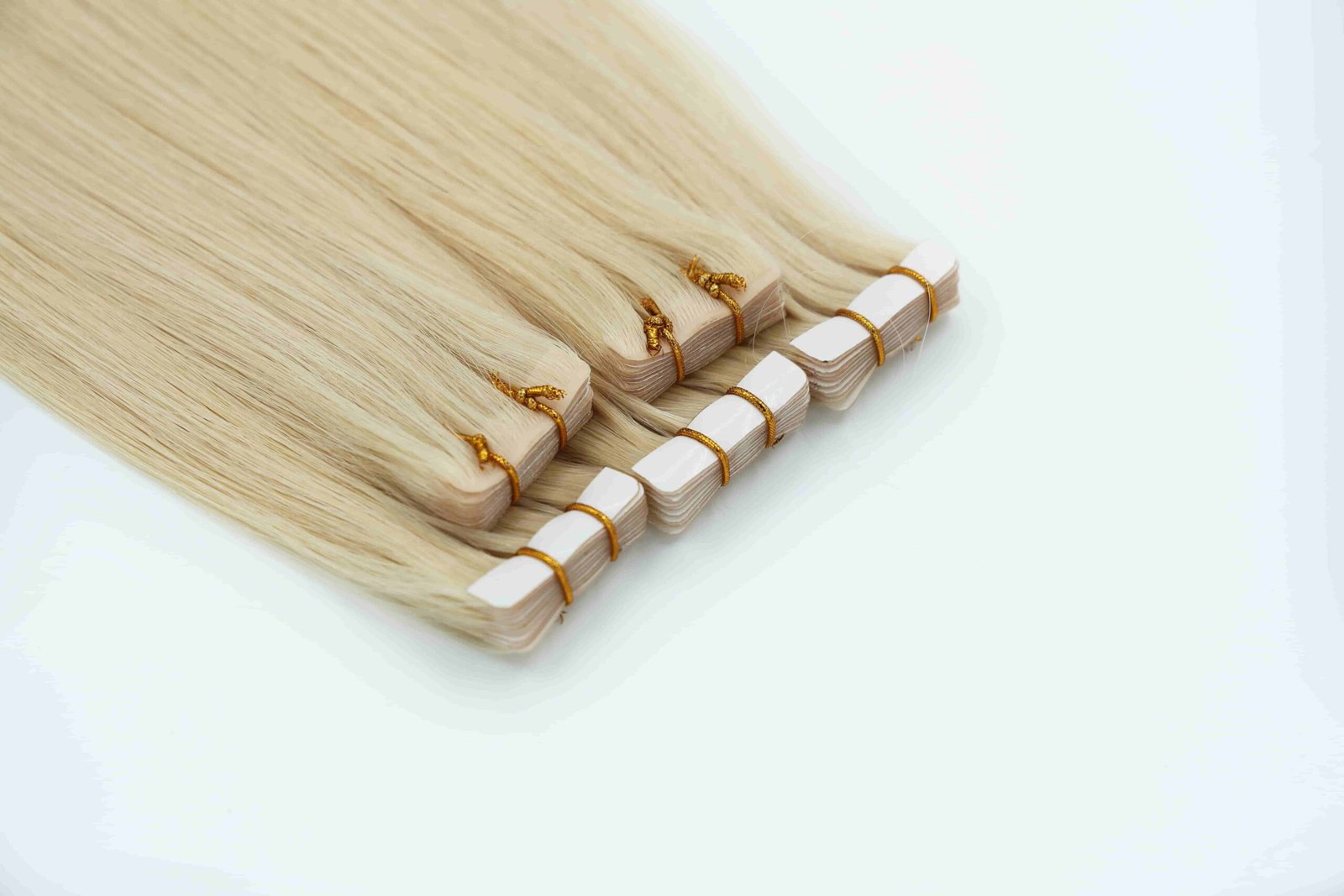
Tape in hair extensions represent a sophisticated application of pressure-sensitive adhesive (PSA) technology within the beauty industry. The primary challenge in manufacturing is creating a bond that remains hypoallergenic on the skin while providing enough tensile strength to support the weight of the hair (typically 2.0g – 2.5g per tab) for multiple months.
At Linwen International Trading (Heze) Co., Ltd., we analyze the chemical specifications of tape in hair extensions to ensure they balance aggressive tackiness with safe removal protocols.
1. Adhesive Types Used in Tape In Hair Extensions
Most professional-grade tape in hair extensions utilize one of two primary chemical families for their adhesive tabs:
- Medical-Grade Acrylic (Standard): This is the most common adhesive used in tape in hair extensions. It is preferred for its high cohesion and resistance to natural oils and sweat. It typically appears as a clear, thin film that maintains a low profile.
- High-Strength Acrylic (Blue-Liner): Often utilized for clients with active lifestyles or oily scalps, this version has a higher cross-linking density. It provides a more aggressive bond but requires specific alcohol-based solvents for safe removal.
- Rubber-Based Adhesives (Non-Professional): Occasionally found in low-grade products, these have high initial “grab” but low thermal stability. They often lead to “meltdown” or sticky residue during removal and are generally avoided in the premium B2B market.
2. Lifespan and Durability of Tape In Hair Extensions
The functional lifespan of tape in hair extensions is determined by the adhesive’s resistance to sebum (natural scalp oils) and external thermal stress.
- Standard Wear Cycle: 6 to 8 weeks. In professional specifications, the bond is designed to maintain 95% of its sheer strength for the first 45 days.
- Thermal Stability: Quality adhesives are rated for stability up to 180°C. This allows for standard blow-drying and flat-ironing without the adhesive softening or causing “slippage.”
- Internal Link: This thermal stability is comparable to our findings in Keratin Tip Specifications, which also prioritize high melting points for salon safety.
3. Comparative Data: Tape In Hair Extensions Performance
| Feature | Medical Acrylic (Clear) | High-Strength (Blue) | Budget Rubber-Base |
| Melting Point | 180°C | 200°C | 120°C (Low) |
| Residue Level | Low (Clean Removal) | Moderate | High (Sticky) |
| Optimal Lifespan | 6 – 8 Weeks | 8 – 10 Weeks | 2 – 4 Weeks |
| Water Resistance | High | Very High | Low |
By adhering to a 180°C thermal stability standard, the adhesive ensures that the client can use standard styling tools without compromising bond integrity.
Internal Link Suggestion: To see how raw material quality affects the weight-load on these adhesives, read theSingle Donor Hair Myth.
4. Removal and Re-application Parameters
The “reusability” of tape in hair extensions is a key advantage for salon ROI, provided the polyurethane (PU) track remains intact.
- Solvent Interaction: Professional tapes are designed to release when saturated with an alcohol-based or oil-based solvent. The solvent should break the van der Waals forces of the adhesive without melting the PU track.
- Cleaning Protocol: Once removed, the PU surface must be cleaned of all residual oils to ensure the new adhesive tab achieves a 100% bond during re-application.
Conclusion
Mastering the chemistry behind tape in hair extensions allows B2B wholesalers to significantly reduce “slippage” complaints. By prioritizing medical-grade acrylics with a 180°C melting point and an 8-week lifespan, Linwen International Trading (Heze) Co., Ltd. provides a system engineered for both stylist convenience and client safety.
Contact us to get the latest price quote for Tape-in hair extensions.